
Logistics & Transportation
Logistics Software That Keeps Fleets, Freight and Field Teams Moving
We build real-time logistics platforms, from fleet tracking and dispatch to field-worker safety and warehouse management, powered by IoT, mobile and AI.
- GDPR
- ISO 27001
- Health & safety reporting
Challenges
What's holding logistics teams back
Visibility
No real-time view of vehicles, shipments and field workers.
Inefficient routing
Fuel, time and capacity wasted on sub-optimal routes.
Worker safety
Lone and field workers at risk without automatic alerts.
Paper-based processes
Manual proof of delivery, inspections and reporting.
Solutions
What we build
Fleet tracking & telematics
GPS and IoT tracking with live maps, alerts and driver scoring.
Dispatch & route optimisation
Smart job assignment and routing to cut miles and delays.
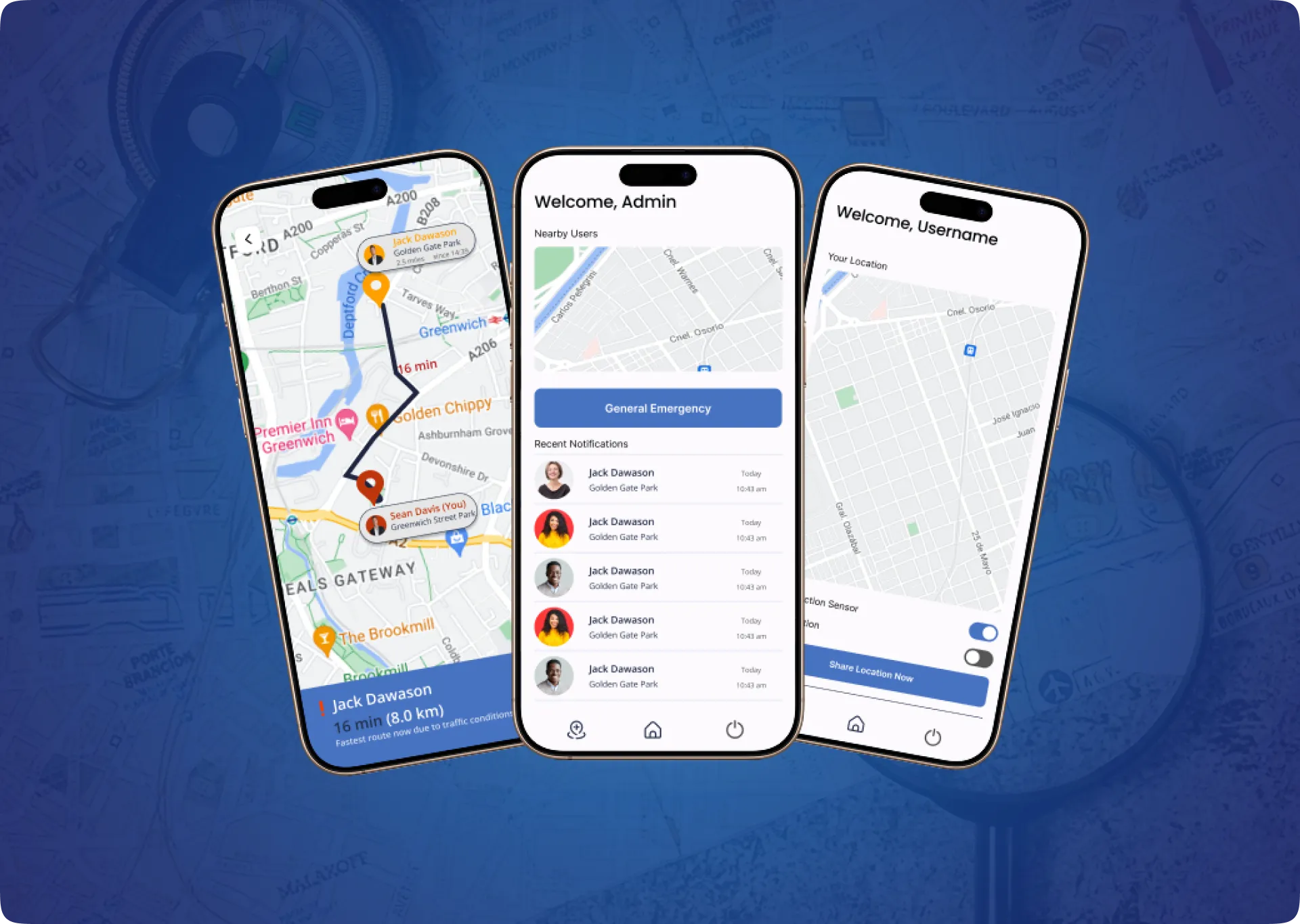
Field-worker safety apps
Smartwatch fall detection, SOS alerts and check-ins.
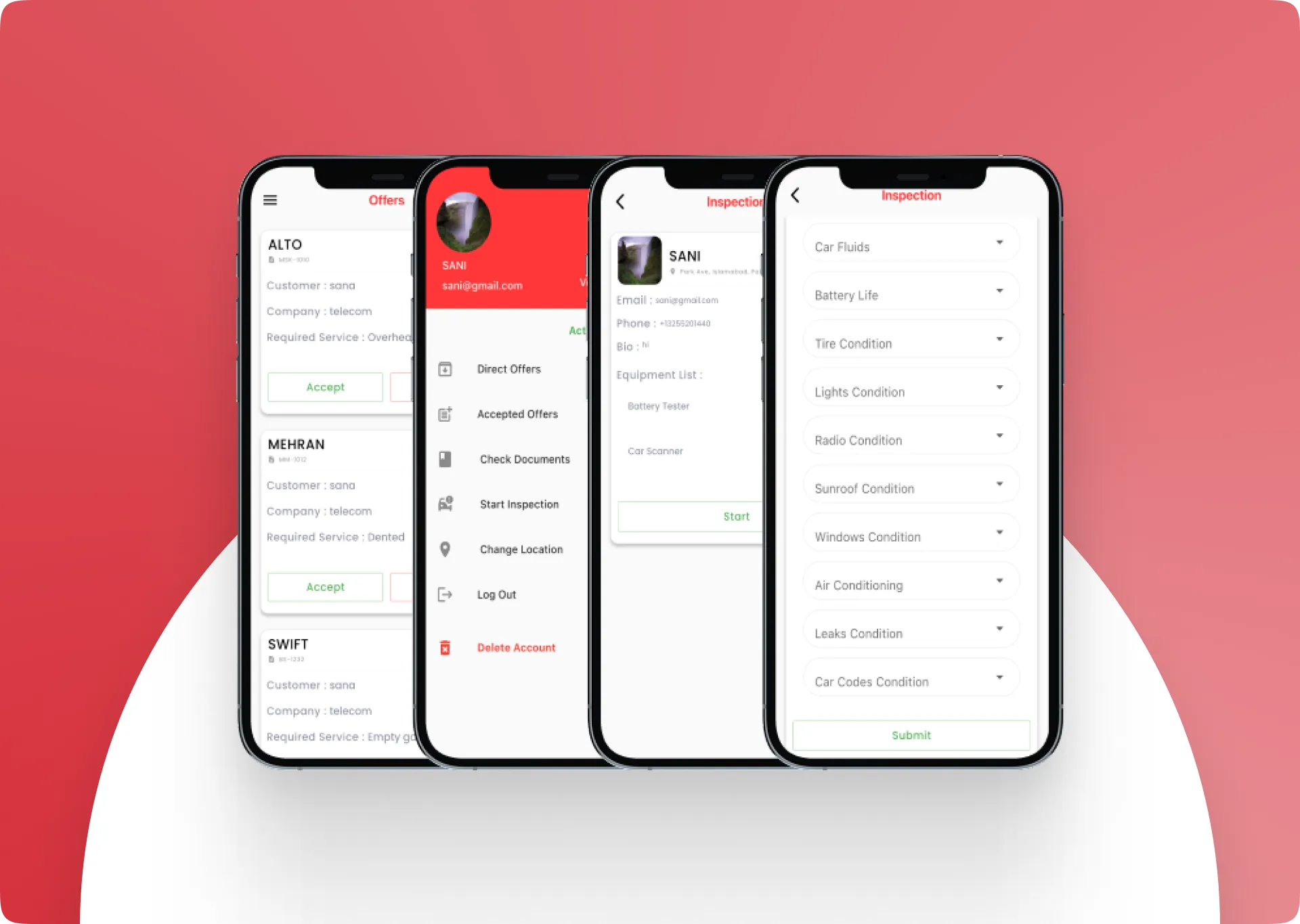
Driver & delivery apps
Proof of delivery, e-signatures, photos and offline mode.
Warehouse management
Inventory, picking, scanning and dashboards.
AI demand forecasting
Predict volume and capacity to plan resources.
Trusted by startups, scale-ups and global brands













Services for this industry
IoT Solutions
Connected devices, real-time dashboards, edge computing and industrial IoT.
Learn moreMobile App Development
High-performance iOS, Android and cross-platform apps that drive engagement.
Learn moreAI & Machine Learning
Predictive analytics, computer vision, generative AI and ML models that turn data into decisions.
Learn moreERP Software Development
Custom ERP and CRM systems that unify finance, HR, inventory and operations.
Learn morePricing & timeline
How much does logistics software cost to build in 2027?
Typical budgets and timelines with our senior team at $25–$40 per hour, including design, development, QA and project management.
| Scope | Timeline | Typical cost |
|---|---|---|
| Fleet tracking platformLive GPS map, trip history, geofences, alerts, driver scoring | 12–18 weeks | $15,000–$25,000 |
| Warehouse management systemReceiving, picking, barcode scanning, stock counts, dashboards | 4–6 months | $20,000–$38,000 |
| Delivery or courier appCustomer, driver and admin apps, live tracking, proof of delivery | 5–8 months | $30,000–$50,000 |
Every project is quoted individually after a free call. Get an instant estimate or ask for a fixed quote.
Ready to accelerate your roadmap?
Get a free consultation and a clear plan in 30 minutes.
FAQ
Frequently asked questions
Can't find your answer? Ask our team.
How much does fleet management or vehicle tracking software cost?
A fleet tracking platform with a live GPS map, trip history, geofences, alerts and driver scoring typically costs $15,000–$25,000 when you use existing trackers. Adding maintenance scheduling, fuel monitoring, driver apps and customer tracking links usually brings it to $25,000–$45,000. Our rate is $25–$40 per hour, and owning the platform avoids per-vehicle SaaS fees as the fleet grows.
How much does it cost to build a delivery or courier app?
A delivery app with customer, driver and admin apps, live tracking, proof of delivery and payments typically costs $30,000–$50,000. A single-city MVP with a simpler customer journey can start around $18,000–$28,000. Dispatch logic and real-time tracking drive the cost far more than the number of screens.
How much does custom warehouse management software cost?
A custom WMS covering receiving, put-away, picking, barcode or RFID scanning, stock counts and dashboards typically costs $20,000–$38,000, with ERP, e-commerce and carrier integrations on top. Custom pays off when your processes don't fit standard tools; otherwise extending an existing WMS with integrations and a mobile scanning app is usually cheaper.
How long does it take to build logistics software?
A fleet tracking or dispatch MVP takes 10–14 weeks, a delivery platform with three apps 4–6 months, and a full TMS or WMS 6 months or more in phases. Hardware integration, tuning route optimisation and field testing with real drivers take time, so we pilot with a small group of vehicles before rolling out.
What tech stack do you use for fleet and logistics platforms?
We usually build driver and field apps in Flutter with offline-first storage, a Node.js, .NET or Python backend, PostgreSQL with PostGIS for geospatial queries, a time-series store for GPS pings, MQTT or WebSockets for live updates, and Google Maps, Mapbox or HERE for maps and routing. Large fleets add a message queue such as Kafka. Native apps are only needed for unusual background-location or hardware demands.
Can you add route optimisation and automated dispatch?
Yes. We use proven routing engines and optimisation solvers for vehicle routing with time windows, capacity and driver shifts, then layer your business rules on top: priorities, skills, zones and service times. Most operations get value from automated job assignment first, then add live re-optimisation when traffic, cancellations or new orders change the day.
Do your driver and field apps work offline?
Yes. Driver and field apps are built offline-first: jobs, maps data, forms, photos and signatures are stored on the device and sync automatically when connectivity returns, with conflict handling so nothing is lost or duplicated. This matters for basements, rural routes and warehouses with poor signal.
Can you integrate with our GPS trackers and telematics hardware?
Yes. We integrate GPS trackers, OBD devices, temperature and door sensors, dashcams and smartwatches through MQTT, vendor APIs or SDKs, and normalise data from mixed hardware into one platform. If you're choosing hardware, we can advise on devices with open protocols so you aren't locked into one vendor's software.
What features should a logistics app MVP include?
A logistics MVP needs live tracking, job creation and assignment, a driver app with navigation hand-off and status updates, proof of delivery with photo and signature, customer notifications with a tracking link, and an admin dashboard with basic reports. Route optimisation, invoicing, analytics and shipper integrations can come in the next phase.
How is AI used in logistics and transportation?
AI forecasts demand and volume to plan capacity, predicts arrival times more accurately, flags risky driving and likely vehicle faults from telematics, reads delivery notes, invoices and customs documents automatically, and powers agents that answer where-is-my-shipment questions. We start where data already exists, usually GPS history and order records, so value shows up quickly.
Do you build lone worker and field safety apps?
Yes. We build safety apps with SOS buttons, timed check-ins, smartwatch fall detection, GPS location sharing and automatic escalation to supervisors when a worker doesn't respond. They are designed to alert reliably on poor signal and keep audit trails for health and safety reporting.
Can logistics software integrate with our ERP, carriers and e-commerce platforms?
Yes. We connect dispatch and tracking systems to ERP and accounting, e-commerce platforms, carrier and courier APIs, EDI feeds and customer portals, so orders flow in automatically and status flows back. Removing manual re-keying is where most logistics teams recover the most time and errors.
Ways to work with us
Engagement options
- Offshore software development
- Hire Flutter developers
- Hire AI engineers
- Hire Python developers
- Hire React developers
- Hire Node.js developers
- Hire mobile app developers
- Hire React Native developers
- Hire Vue.js developers
- Hire Angular developers
- Hire frontend developers
- Hire backend developers
- Hire full-stack developers
- Hire UI/UX designers
- Hire QA engineers
- Hire DevOps engineers
- Hire cloud engineers
- Hire cybersecurity experts
- Hire SEO specialists
- Hire PPC experts
- Hire WordPress developers
- Hire Webflow developers
- Hire social media managers
- Hire content writers
- Hire digital marketers
- Hire game developers
- Staff augmentation
- Project cost calculator
Global delivery
Logistics & Transportation software for clients worldwide
North America
Middle East
South Asia
Free consultation
Let's build something that actually works
Tell us about your project and get a free 30-minute consultation with a senior engineer. You'll leave with clear next steps, whether you work with us or not.
- Reply within one business day
- NDA on request, 100% IP ownership
- Clear scope, timeline and estimate
- Talk directly to senior engineers