
Cloud, IoT & Security
Enterprise Internet of Things Development (IOT) That Turn Data into Competitive Advantage
From connected devices to real-time analytics, we design and deploy secure, scalable IoT ecosystems that drive operational efficiency, predictive intelligence, and measurable ROI.
Overview
Enabling Smarter IoT Systems with AIM Digital Technologies
Most IoT projects fail not because of a lack of innovation, but due to fragmented IoT architecture, insecure device connectivity, and untapped data. Businesses seek IoT development services for real-time insights, predictive maintenance, and operational visibility, yet face challenges in system integration, scalability, and security. At AIM Digital Technologies, we deliver enterprise-grade IoT solutions that overcome these obstacles. Our services cover end-to-end IoT development, including device integration, edge computing, cloud-native platforms, and AI-powered analytics, transforming connected data into actionable insights and measurable business outcomes.
What we offer
Our IoT Development Services
Io T App & Web Portal Development
Build custom IoT apps and portals for real-time device monitoring, remote control, and smart automation, delivering scalable, secure, and intuitive IoT software solutions for enterprise and consumer needs.
Smart Home & Consumer Io T
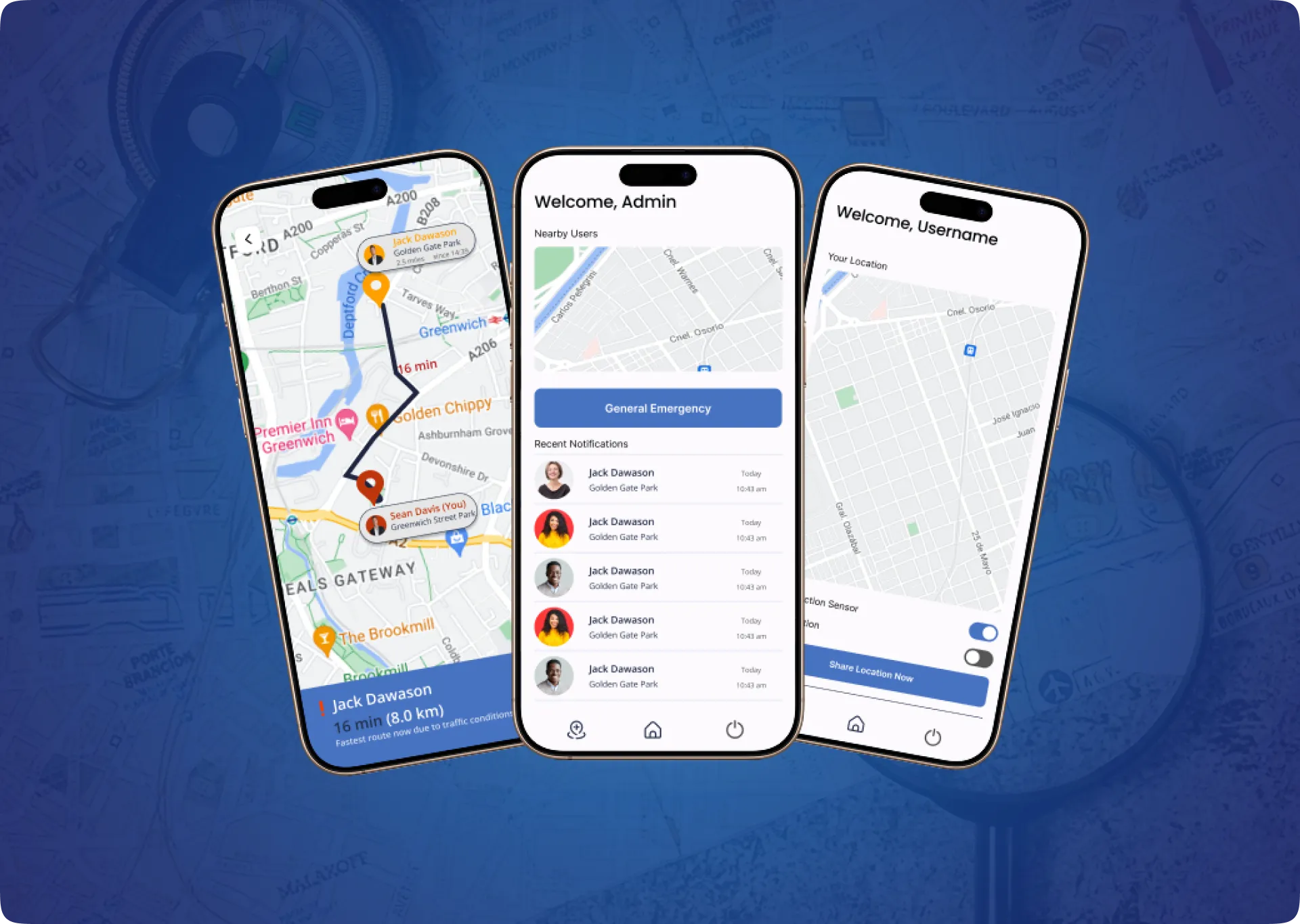
Design connected home and consumer IoT solutions, including automation, wearables, and smart devices, focused on security, interoperability, and enhanced user experience for smarter, energy-efficient, and AI-driven lifestyles.
Io T Security & Compliance
Protect your IoT ecosystem with enterprise-grade security, device authentication, encryption, and regulatory compliance, ensuring data privacy, threat prevention, and adherence to ISO, GDPR, HIPAA, and industry standards.
Io T Analytics, ML & Edge Computing
Leverage IoT analytics, machine learning, and edge computing to process real-time data, detect anomalies, predict trends, and empower businesses with faster, intelligent, and scalable IoT operations.
Industrial Io T (IIo T) Solutions
Enhance industrial operations with IIoT solutions for manufacturing, logistics, and smart factories, enabling predictive maintenance, real-time monitoring, and automated workflows to maximize efficiency and reduce costs.
Io T Cloud & Platform Development
Scale your IoT ecosystem with secure cloud platforms for device management, real-time analytics, and multi-cloud integration, ensuring centralized control, reliability, and enterprise-grade IoT performance.
Device Connectivity & API Integration
Enable seamless connectivity with API integration, protocol mapping, and middleware solutions, ensuring interoperable devices, unified data flow, and efficient automation across your IoT ecosystem.
Io T Dashboard & Data Visualization
Transform IoT data into actionable insights using interactive dashboards, KPI tracking, and analytics interfaces, empowering enterprises with real-time monitoring, trend analysis, and informed, data-driven decisions.
Trusted by startups, scale-ups and global brands













How we work
A proven process from idea to impact
Discovery & consultation
We dig into your goals, users and constraints, then turn them into a clear scope, success metrics and a delivery roadmap.
Planning & architecture
We choose the right stack, design the system architecture and plan sprints so cost, timeline and risk are visible from day one.
Design & prototyping
Wireframes, UI design and clickable prototypes validated with real users before a line of production code is written.
Agile development
Two-week sprints with demos, AI-assisted engineering and code reviews. You see working software every sprint.
QA, security & launch
Manual and automated testing, security checks and performance tuning, then a smooth release to the cloud and app stores.
Growth & support
Monitoring, maintenance, analytics and continuous improvement so the product keeps getting better after launch.
Why AIM Digital
Why companies choose AIM Digital Technologies
AI-first engineering
From idea to production, we take AI concepts to working proof of concept in as little as 90 days, and use AI tooling to ship everything faster.
Product-first mindset
We focus on outcomes, not outputs, aligning product strategy, engineering and UX with your business and customer goals.
Delivery excellence
Agile, high-velocity delivery with transparent sprints, demos and reporting. Reliable results without delays or excuses.
Industry insight
Deep experience across fintech, healthcare, real estate, e-commerce, logistics and education means practical solutions built for real impact.
Global delivery, local focus
Teams serving clients across the USA, Canada, UK, Europe, the Gulf, Singapore and Australia, with overlap across your working hours.
Security by design
Security is embedded, not added on. We build for compliance needs across healthcare, finance and enterprise systems.
Technologies we use
- MQTT
- SignalR
- .NET
- Azure Cosmos DB
- AWS IoT Core
- Azure IoT Hub
- BLE
- LoRaWAN
- Node-RED
- InfluxDB
- Grafana
- Edge AI
Pricing & timeline
How much does IoT development cost in 2027?
Typical budgets and timelines for fixed-price projects at $12.50 per hour, including design, development, QA and project management.
| Scope | Timeline | Typical cost |
|---|---|---|
| IoT proof of conceptA few devices connected to a live dashboard | 4–8 weeks | $2,500–$5,000 |
| Connected productDevice integration, cloud platform, mobile app, dashboards | 4–6 months | $7,500–$15,000 |
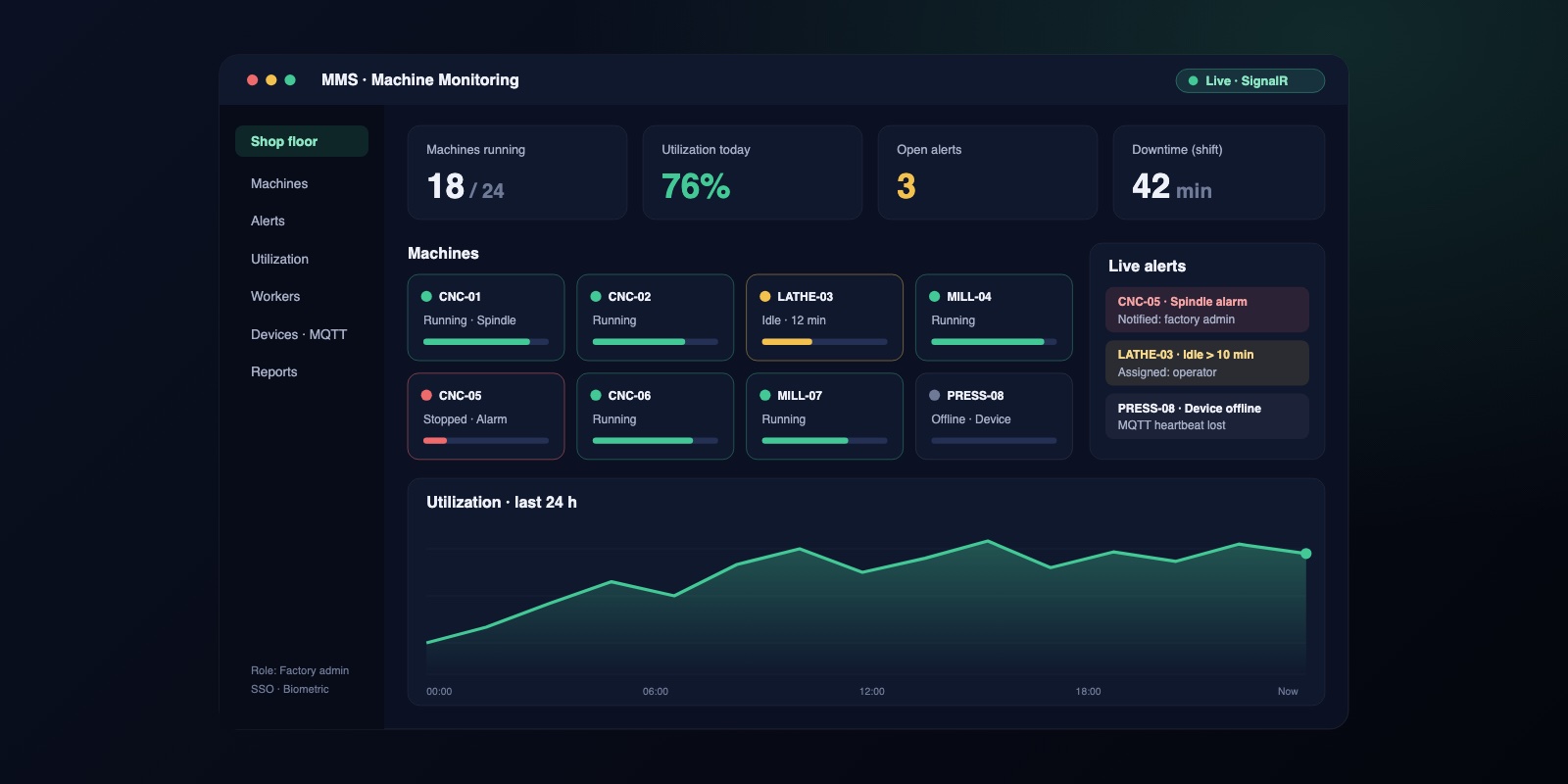
| Industrial IoT platformMulti-site machine monitoring, roles, alerts and analytics | 6–12 months | $15,000–$31,500 |
Software only: hardware, connectivity and certification are extra. Every project is quoted individually after a free call. Get an instant estimate or ask for a fixed quote.
Ready to start your IoT solutions project?
Get a free consultation and a clear plan in 30 minutes.
Engagement models
Choose the partnership model that fits your project
Flexible models that match your goals, timeline and budget. Switch as your needs change.
Project-based delivery
Fixed scope, fixed timeline. We own delivery end to end, from discovery to launch. Best for well-defined products and MVPs.
- Fixed price & milestones
- Dedicated project manager
- Weekly demos and reports
Dedicated product team
A cross-functional squad (PM, designers, engineers, QA) that works as an extension of your company on an evolving roadmap.
- Scale up or down monthly
- Full-time, focused team
- Your process, our talent
Staff augmentation
Add pre-vetted developers, AI engineers, QA or DevOps experts to your in-house team in days, not months.
- $2,500/month per senior hire
- 1-week trial for $625
- Free replacement anytime
Client reviews
Global client reviews that speak volumes
FAQ
Frequently asked questions
Can't find your answer? Ask our team.
How much does IoT development cost?
An IoT proof of concept connecting a few devices to a dashboard typically costs $2,500–$5,000. A connected product with device integration, cloud platform, mobile app and dashboards usually costs $7,500–$15,000, and a multi-site industrial IoT platform $15,000–$31,500 or more. These ranges cover software at $12.50 per hour; hardware, connectivity and certification are extra.
How long does it take to build an IoT solution?
A proof of concept typically takes 4–8 weeks. A production-ready connected product or monitoring platform usually takes 3–5 months, and industrial rollouts across several sites 6–12 months or more, delivered in phases. Hardware availability and field testing often set the pace more than software.
Do you build IoT hardware and firmware?
Our focus is the software side: device connectivity, cloud platforms, real-time dashboards, mobile apps and analytics. We integrate with your existing devices, PLCs, gateways and sensors, including custom PCB-based monitoring devices, and work alongside your hardware team or manufacturing partner when new boards, enclosures or certifications are needed.
Can you connect our existing machines and equipment to the cloud?
Usually, yes. Older machines can be retrofitted with sensors or monitoring devices, and newer ones often expose data through standard industrial protocols. For a US manufacturer we built a real-time machine monitoring platform that streams machine status over MQTT into live dashboards, alerts and utilisation reports across many factories.
AWS IoT Core or Azure IoT Hub: which IoT platform should we use?
Pick the cloud your company already uses. Azure IoT Hub fits Microsoft-centric businesses and pairs well with .NET, SignalR and Cosmos DB; AWS IoT Core fits AWS shops and has strong rules and analytics integration. Google retired its IoT Core service, so Google Cloud users typically use a managed MQTT broker instead.
Which protocol should IoT devices use: MQTT, HTTP or something else?
MQTT is our default for most IoT products: lightweight, reliable on poor networks and designed for many devices publishing frequent messages. HTTP suits devices that report rarely. BLE connects devices to a nearby phone, and LoRaWAN or cellular covers long distances with low power. Many systems use more than one.
Which database is best for IoT sensor data?
Use a time-series database for high-frequency sensor readings: InfluxDB or TimescaleDB on PostgreSQL are our usual choices, with Azure Cosmos DB for globally distributed, high-throughput workloads. Device registries, users and settings belong in a relational database. Older raw data is moved to cheaper storage to keep costs down.
What is edge computing in IoT, and do we need it?
Edge computing processes data on or near the device instead of sending everything to the cloud. You need it when decisions must happen in milliseconds, connectivity is unreliable, bandwidth is expensive or data must stay on-site. Many systems filter and aggregate at the edge, then send summaries to the cloud for dashboards and analytics.
How secure are IoT systems, and how do you protect them?
IoT is only as secure as its weakest device, so we design security in: unique device identities and certificates, encrypted communication, signed over-the-air updates, least-privilege cloud access, network segmentation and monitoring for unusual behaviour. Default passwords and shared keys are never used.
What is the difference between IoT and IIoT?
IoT usually means consumer and commercial connected devices such as smart home products, wearables and trackers. Industrial IoT (IIoT) applies the same ideas to factories, energy, logistics and heavy equipment, where reliability, real-time monitoring, integration with industrial protocols and long equipment life matter most.
Can IoT data be used for predictive maintenance and AI?
Yes, once you have collected enough history. A common path is to start with real-time monitoring and alerts, add utilisation and downtime reports, then train models to detect anomalies and predict failures. Edge AI can run simple models on-site for instant decisions.
Who owns the IoT platform and the device data?
You do. You own 100% of the software, IP and the data your devices generate, and the platform runs in your own cloud account. We sign an NDA before discussing your product and hand over documentation so your team can operate and extend the system.
Related services
AI & Machine Learning
Predictive analytics, computer vision, generative AI and ML models that turn data into decisions.
Learn moreMobile App Development
High-performance iOS, Android and cross-platform apps that drive engagement.
Learn moreDevOps & Cloud
CI/CD, infrastructure as code, Kubernetes and cloud cost optimisation.
Learn moreExplore more about IoT solutions
Industries we build for
Hire & pricing
Guides & services
Global delivery
IoT Solutions for clients worldwide
Delivered from our Islamabad head office for companies across North America, Europe, the Gulf and Asia-Pacific.
North America
Middle East
South Asia
Free consultation
Let's talk about your IoT solutions project
Tell us about your project and get a free 30-minute consultation with a senior engineer. You'll leave with clear next steps, whether you work with us or not.
- Reply within one business day
- NDA on request, 100% IP ownership
- Clear scope, timeline and estimate
- Talk directly to senior engineers