
E-commerce & Retail
E-commerce Development That Converts Browsers Into Buyers
We design and build fast, conversion-focused online stores, marketplaces and shopping apps, and grow them with SEO, paid media and AI personalisation.
- PCI DSS
- GDPR
- WCAG accessibility
Challenges
What's holding e-commerce teams back
Low conversion rates
Slow pages, clunky checkout and weak product pages lose sales.
Rising acquisition costs
Paid traffic keeps getting more expensive without better retention.
Inventory & operations
Keeping stock, orders and fulfilment in sync across channels.
Personalisation
Shoppers expect recommendations and offers tailored to them.
Solutions
What we build
Shopify & headless stores
Shopify, Shopify Plus and headless Next.js storefronts built for speed.
Custom marketplaces
Multi-vendor platforms with payouts, reviews and vendor dashboards.
Mobile shopping apps
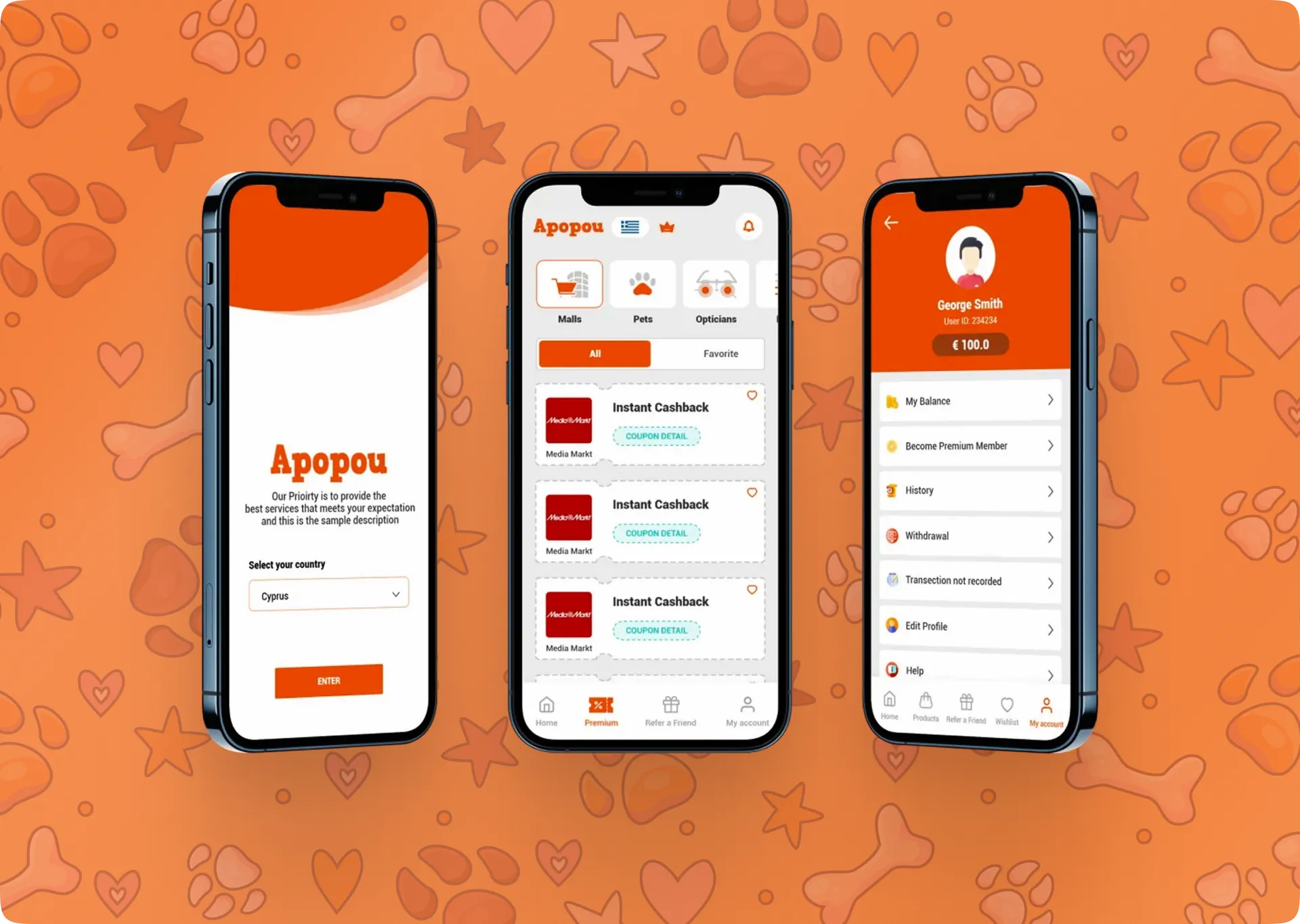
iOS and Android apps with push notifications and one-tap checkout.
Cashback & loyalty
Rewards, cashback and coupon platforms that drive repeat purchases.
AI recommendations & search
Personalised products, smart search and AI shopping assistants.
CRO & growth marketing
A/B testing, SEO, Google Shopping and Meta Ads.

Trusted by startups, scale-ups and global brands













Services for this industry
Web Development
Fast, SEO-ready websites, web apps, portals and e-commerce stores.
Learn moreSEO & Digital Marketing
SEO, Google and Meta Ads, LinkedIn and conversion optimisation that generate leads.
Learn moreUI/UX Design
Research-driven, conversion-focused product design for web and mobile.
Learn moreMobile App Development
High-performance iOS, Android and cross-platform apps that drive engagement.
Learn moreAI & Machine Learning
Predictive analytics, computer vision, generative AI and ML models that turn data into decisions.
Learn morePricing & timeline
How much does an e-commerce store or marketplace cost in 2027?
Typical budgets and timelines with our senior team at $25–$40 per hour, including design, development, QA and project management.
| Scope | Timeline | Typical cost |
|---|---|---|
| Shopify storeCustom theme, product setup, payments, SEO basics | 3–6 weeks | $3,000–$7,500 |
| Headless or custom storefrontComplex catalogues, B2B pricing, ERP integration | 8–14 weeks | $10,000–$20,000 |
| Shopping app for iOS and AndroidCatalogue, cart, checkout, push notifications, order tracking | 8–14 weeks | $10,000–$18,000 |
| Multi-vendor marketplace MVPBuyer and seller journeys, vendor payouts, reviews, moderation | 12–18 weeks | $23,000–$35,000 |
Every project is quoted individually after a free call. Get an instant estimate or ask for a fixed quote.
Ready to accelerate your roadmap?
Get a free consultation and a clear plan in 30 minutes.
FAQ
Frequently asked questions
Can't find your answer? Ask our team.
How much does it cost to build an e-commerce website?
A Shopify store with a custom theme, product setup, payments and SEO basics typically costs $3,000–$7,500. A headless or custom storefront for complex catalogues, B2B pricing or ERP integration usually costs $10,000–$20,000. Our rate is $25–$40 per hour. Platform subscriptions, apps and payment fees are ongoing costs on top of the build.
How much does it cost to build a multi-vendor marketplace?
A two-sided marketplace MVP with buyer and seller journeys, vendor dashboards, payouts, reviews and admin moderation typically costs $23,000–$35,000 and takes 12–18 weeks. A mature marketplace with mobile apps, logistics integration, promotions and advanced analytics usually costs $38,000–$63,000, delivered in phases. Split payments and vendor payouts are the hardest part to get right.
How much does a shopping app for iOS and Android cost?
A Flutter shopping app connected to your Shopify or custom backend, with catalogue, cart, checkout, push notifications and order tracking, typically costs $10,000–$18,000. Adding loyalty, wishlists and personalised recommendations brings it to $18,000–$28,000. One Flutter codebase covers both app stores, so you don't pay for two separate native apps.
Should I use Shopify, WooCommerce or a custom e-commerce platform?
Shopify suits most brands: fast launch, reliable checkout and a huge app ecosystem. WooCommerce fits content-heavy sites already on WordPress. Choose headless Shopify with a Next.js storefront when speed and unique design matter, and a fully custom platform for marketplaces, complex B2B pricing, unusual subscription rules, or when platform fees exceed the cost of owning your stack.
How long does it take to build an online store?
A Shopify store takes about 3–6 weeks depending on design and product data. A headless or custom store takes 8–14 weeks, and a marketplace MVP 12–18 weeks. Product data cleanup, content and integrations with ERP, shipping and payment providers usually decide the timeline more than the storefront itself.
Can you migrate our store to a new platform without losing SEO?
Yes. We map every product, category and content URL, set up 301 redirects, carry over titles, meta descriptions and structured data, migrate customers and order history, and monitor Search Console and rankings closely through launch. Most traffic loss after migrations comes from missed redirects, so we test them before going live.
What features should an online store or marketplace launch with?
Launch with fast product pages, search and filters, a frictionless checkout with local payment methods, guest checkout, order emails and tracking, reviews, basic promotions and analytics. Marketplaces add vendor onboarding, commission rules, payouts and dispute handling. Loyalty, personalisation and subscriptions can follow once you see real buying behaviour.
Which systems can you integrate with an e-commerce store?
We integrate payment gateways and buy-now-pay-later providers, shipping and courier APIs, ERP and inventory systems, accounting, CRMs, email and SMS marketing platforms, product information management tools and marketplaces such as Amazon. Inventory and order sync across channels matters most, so we design it with retries and reconciliation reports to prevent overselling.
How can AI increase e-commerce sales?
AI lifts sales through personalised product recommendations, smart search that understands natural language and typos, shopping assistants that answer product questions, automated product descriptions and translations, and demand forecasting for inventory. Support agents can also handle order-status and returns questions around the clock. We start with the use case closest to revenue and measure it with A/B tests.
How do you improve an online store's conversion rate?
We start with a CRO audit of analytics, page speed, product pages and checkout, then run prioritised A/B tests. Typical wins come from faster pages, clearer product information and photos, fewer checkout steps, trust signals, local payment methods and better mobile UX. Every change is measured against your baseline, so you invest only in what moves revenue.
Do you build cashback, loyalty and rewards platforms?
Yes. We build points, tiers, cashback, referral and coupon systems, either inside your store or as a standalone platform that connects to affiliate networks and partner merchants. The hard parts are accurate tracking, fraud prevention and balances users trust, so we design the rewards ledger and reporting carefully from the start.
What compliance does an online store need?
Use a hosted checkout from Shopify, Stripe or another certified gateway so card data never touches your servers, keeping PCI DSS scope minimal. Add cookie consent and privacy controls for GDPR, UK GDPR or CCPA, and build to WCAG accessibility, which the European Accessibility Act now requires for many online shops selling to EU consumers.
Ways to work with us
Engagement options
- Offshore software development
- Hire Flutter developers
- Hire AI engineers
- Hire Python developers
- Hire React developers
- Hire Node.js developers
- Hire mobile app developers
- Hire React Native developers
- Hire Vue.js developers
- Hire Angular developers
- Hire frontend developers
- Hire backend developers
- Hire full-stack developers
- Hire UI/UX designers
- Hire QA engineers
- Hire DevOps engineers
- Hire cloud engineers
- Hire cybersecurity experts
- Hire SEO specialists
- Hire PPC experts
- Hire WordPress developers
- Hire Webflow developers
- Hire social media managers
- Hire content writers
- Hire digital marketers
- Hire game developers
- Staff augmentation
- Project cost calculator
Global delivery
E-commerce & Retail software for clients worldwide
North America
Middle East
South Asia
Free consultation
Let's build something that actually works
Tell us about your project and get a free 30-minute consultation with a senior engineer. You'll leave with clear next steps, whether you work with us or not.
- Reply within one business day
- NDA on request, 100% IP ownership
- Clear scope, timeline and estimate
- Talk directly to senior engineers